GAAD, Genetic Aided Architectural Design, is pioneering a new category of software: the Design Memory Platform. Procedural modelling, parametric design and artificial intelligence have transformed how geometry is created, but they remain focused on producing designs. GAAD goes further. It preserves the complete design journey, every generation, every decision, every evolutionary step, so that creativity becomes permanent, replayable knowledge rather than a forgotten process. One principle underpins it: decisions become data, and in time, knowledge.
The journey is the artefact.
GAAD preserves not the model but the route to it, every option weighed, every path taken and every one turned down, held so the route can be walked again, questioned and learned from.
The why, not just the what.
Other tools learn from finished things. GAAD records the decision behind each move, along with the relationships and lineage behind every solution, so a design can be understood, not only reproduced.
Memory that outlives the tool.
The record is one thing, and any number of tools can read it. GAAD builds a growing body of reusable design intelligence that can be explored, understood and extended over time, so the design survives the software that drew it.
We believe the future of digital design lies not only in creating better designs, but in remembering how they came to exist.
GAAD began as an MSc in Architecture and Computing at the University of East London. In 1994, the thesis Digital Evolutions set out an idea that was unusual at the time: that a design could be grown through evolution, with the designer as the fitness function, and that every design decision could be recorded, replayed and learned from. This was long before AI was part of the conversation.
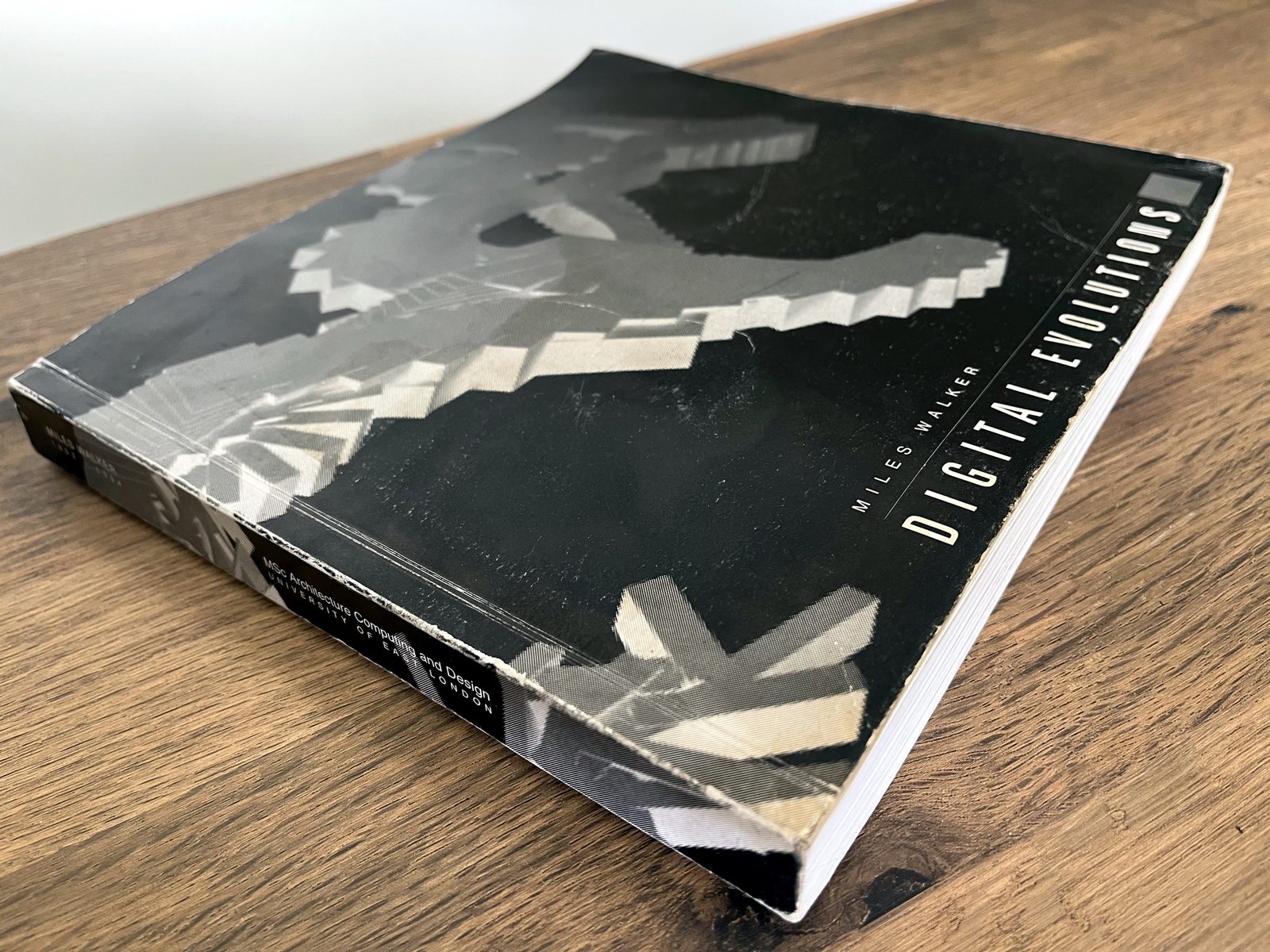
The question behind it, first asked in 1992, has not gone away: why do we remember the final design, but lose the thinking that created it?
Most design tools, including today's AI, learn from finished artefacts. GAAD is built around the why, not just the what. It captures design knowledge and preserves the full design journey, so a design can be understood, not just reproduced. The belief is that the next generation of design tools won't simply generate ideas; they'll remember the decisions that created them.
GAAD is founded and built by Miles Walker. It began with the instinct of an architectural technician: an interest in the detail. That same instinct took him into BIM, where he was an early pioneer from 2003, leading it for more than twenty years across major projects in London and international design practices and construction firms, and it runs straight through to GAAD: capturing the detail of a design decision, not just its outcome.
GAAD is built by a team of four, each seat with a job of its own. How that team works, and how the work moves between them, is set out on The Team.
Explore the record: read the Episodes for the story of the build, or browse the Records: the decisions, pivotal moments and features that make up GAAD's own design memory. GAAD is in active research and development. Follow the build and join the discussion on LinkedIn, where research, development and partnership enquiries are also welcome.